
BEAUTY OUT OF DAMAGE 1991-1994
"The Beauty Out of Damage Series" is Matuschka’s most iconic and internationally recognised work. These self-portraits were taken between 1991 & 1994 after the artist lost her right breast and were the first images of their kind to be published world-wide. When The New York Times printed the controversial picture on the right, the breast cancer movement was officially launched, sparking an international conversation about woman's health, image, activism and acceptance of disfigured bodies. The publication of Beauty out of Damage remains a defining moment in history. Its impact continues to resonate across visual culture, medicine, and feminist discourse until this day.
In 2003 and again in 2011, LIFE Magazine featured the photograph in its special edition, "100 Photographs That Changed the World". That same year, The New York Times and the Aperture Foundation included "Beauty Out of Damage" in the book The New York Times Magazine Photographs, showcasing 250 of the most important images published by the magazine over a 30-year period. In 2012, Semana Magazine — South America’s equivalent to Newsweek — named "Beauty Out of Damage" as one of the most significant photographs of the past three decades in celebration of its 30th anniversary.
CBS Sunday Morning aired a tribute to both Matuschka and the image, recognising its pivotal role in shifting cultural conversations around breast cancer and body autonomy in 2013.
"Beauty out of Damage" went on to receive 12 major awards, including a Pulitzer Prize nomination and earned Matuschka several humanitarian honours such as the Racheal Carson Award, ABC’s Person of the Week (Peter Jennings World News), and a Gildner Radner Award.By the mid-1990s, "Beauty Out of Damage" became one of the most widely published photographs in the world, appearing in hundreds of international publications, books, exhibitions, television programmes and documentaries. Three decades after its debut, the image remains in circulation — frequently cited in academic and medical journals. Today, "Beauty Out of Damage" is held in numerous museum collections and continues to be exhibited around the world — a lasting symbol of resilience, resistance, and the redefinition of what's acceptable in bodily appearance.

"It was not simply nudity that shocked early viewers of Edouard Manet¹s"Dejeuner sur l¹herbe." The tumble of clothing beside her make clear thatthe woman in the foreground has literally "stripped herself bare" before hermale companions. And as though to add insult to injury, she stares boldlytoward us, radiantly self-confident and perhaps even a trifle amused by thereactions she provokes. It is difficult to think of a work with a comparablepower to weak bourgeois hypocrisies until, more than a century later,Matuschka broke topless taboos with her appearance on the cover of ³the NewYork Times Magazine.² In a breathtaking portrait of the artist producedafter her mastectomy, an entire generation was sensitized to one of thegreatest hush-hush conspiracies of the 20th Century.
-Dr. David Galloway From "The Body in the 20th Century"

"Beauty Out of Damage" was shot with a Canon F1 on 35mm 50 ASA Agfa colour negative film and printed by the artist in 1993. Two editions are available in sizes 20 x 24” and 16 x 20”
"The photograph stirred a conversation about the scandal of ignoring breast cancer by insisting that breast cancer happened and that people should do something about that."
-Rosemarie Garland-Thomson From "The Feminist Film Philosophy Reader"
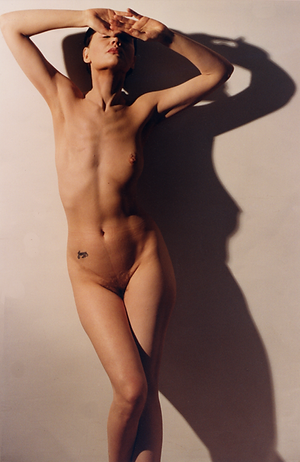
Classic Nude, 1992

Golden Girl, 1992

Pledge, 1993

Sunday Morning, 1993

Time For Prevention, 1994

Vote For Yourself, 1991

Picture Prevention, 1994

Architects View #1, 1992
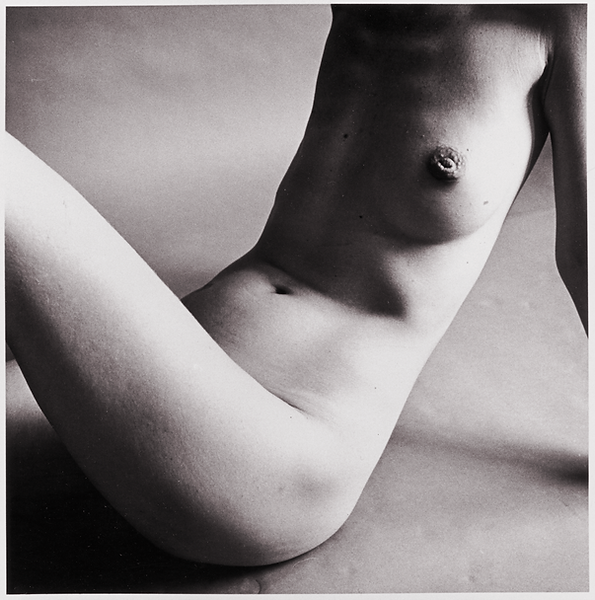
Architects View #2, 1992

Classic Nude B & W #1, 1992

Beauty's Nothing, Nadav Kander, 1994

Classic Nude B & W #2, 1992

The New Deal, 1994

The Hand, 1992
Madonna, 1994
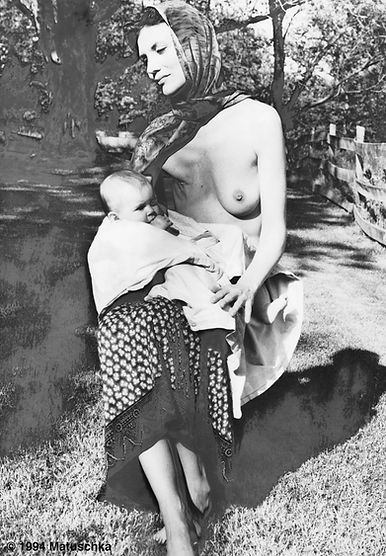

Centerfold, (Poloroid) 1992
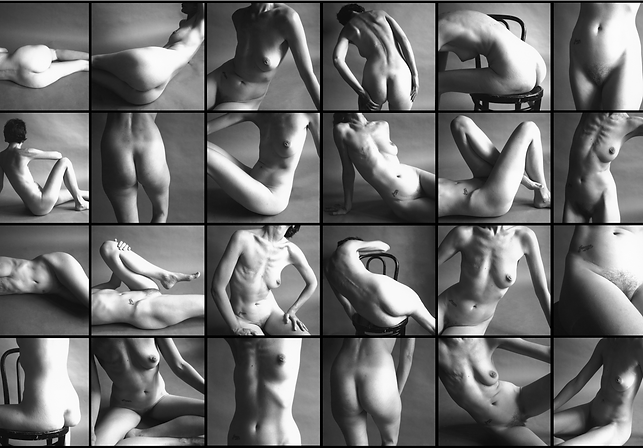
Architect Grid, 1992/2000
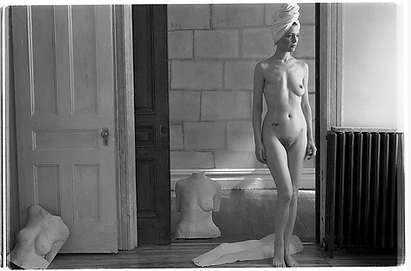
Turban Standing Up Front, 1992

Turban Squat, 1992

Turban Standing Against Back Wall, 1992

Tattooectomy, 2003
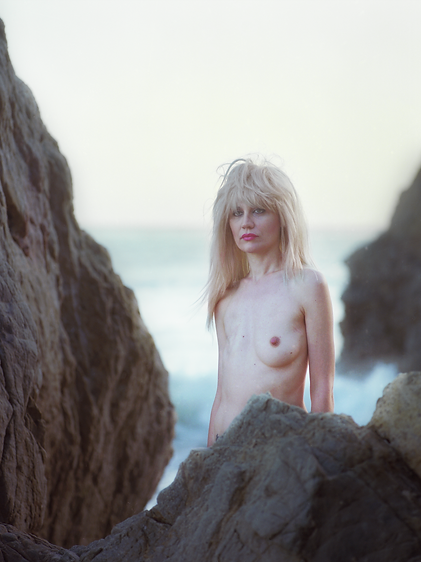
The Little Mermaid, 1993

The Archer, 1994

The Archer (Sunset), 1994
"What makes a heroine? Someone who enters difficult battles and emerges victorious. Someone who challenges society's thinking and creates a new and higher standard then ever before. Someone who inspires, provides hope,encouragement and support to many many peopleS Matuschka is a women to admire, for her beauty, to thank, for her fierce bravery, and most especially, to honor, for her [heroism]."
–Leigh Silverman
Award winning Broadway Director
"It wasn't just her damaged chest but her resilient dignity which was so powerful."
–Sandra Day O'Connor
Supreme Court Justice, Breast Cancer Survivor
"The purpose of radical art is to raise the subjective dimensions of social problems. Matuschka did just that with her picture on the cover of the New York Times Magazine."
–Brian J. Jones
Sociology, Micro, Macro and Mega Structures Harcourt Brace, 1995
"Matuschka's photographs help eradicate shame and take the wraps off of a taboo topic. If Matuschka's uncomfortable images can do that -- they're worth the discomfort."
–The Cincinnati Inquirer, Ohio
SELECT TV
Person of the Week, World-Wide News with Peter Jennings, 1993
Charlie Rose, 1994
SELECT COVERS


SELECT PRESS
The series, Beauty Out of Damage drew powerful responses from critics and audiences alike. The press clippings capture the dialogue the work generated — exploring and questionning issues related to survival, transformation, acceptance and self empowerment.
Presented here is a sample of the coverage; many more pieces are carefully preserved in the archive’s storage room, offering a broader view of how Beauty Out of Damage first resonated across the art world and beyond.


