
This collection dating from the 1980s thru mid 1990s features silver gelatin prints that have been enhanced and altered through chemical toning, bleaching and solarization. Each one-of-a-kind print captures an almost (3-dimentional) effect showcasing Matuschka's mastery in manipulating light and chemical processes to reveal rich textures, and in cases, witness the metallic oxidations of the metals emerging out of the paper. Educated first in the physical manipulation of darkroom photography—initially with her mentor--Don Snyder—Matuschka considers photo manipulation to be a process that transforms straight photography into another medium. These chemically manipulated prints have a unique tonal range, and a "gold standard" appeal. These works, made from 35 mm B & W negative film were created in 1989 and 1994 and have never been exhibited before; they have remained ‘in the dark’ in archival boxes retaining their quality as if they were printed yesterday.
Digital reproductions are available on request.
This collection dating from the 1980s thru mid 1990s features silver gelatin prints that have been enhanced and altered through chemical toning, bleaching and solarization. Each one-of-a-kind print captures an almost (3-dimentional) effect showcasing Matuschka's mastery in manipulating light and chemical processes to reveal rich textures, and in cases, witness the metallic oxidations of the metals emerging out of the paper. Educated first in the physical manipulation of darkroom photography—initially with her mentor--Don Snyder—Matuschka considers photo manipulation to be a process that transforms straight photography into another medium. These chemically manipulated prints have a unique tonal range, and a "gold standard" appeal. These works, made from 35 mm B & W negative film were created in 1989 and 1994 and have never been exhibited before; they have remained ‘in the dark’ in archival boxes retaining their quality as if they were printed yesterday.
Digital reproductions are available on request.
CHEMICALLY TONED SILVER
GELATIN PRINTS 1972-2000
The chemically toned silver gelatin print is the result of both science and alchemy. In this darkroom process, a black-and-white photograph printed on silver gelatin paper is submerged in a bath of chemical toners — often selenium, sepia, or gold. These metals react with the silver particles suspended in the emulsion, transforming the image’s tone and texture. What begins as a monochrome surface deepens into something more atmospheric: shadows warm, highlights glow, and the entire print takes on a subtle, tactile almost 3-D presence. No two prints respond in exactly the same way, making each work a singular artefact.
This collection dating from the 1980s thru mid 1990s features silver gelatin prints that have been enhanced and altered through chemical toning, bleaching and solarization. Each one-of-a-kind print captures an almost (3-dimentional) effect showcasing Matuschka's mastery in manipulating light and chemical processes to reveal rich textures, and in cases, witness the metallic oxidations of the metals emerging out of the paper. Educated first in the physical manipulation of darkroom photography—initially with her mentor--Don Snyder—Matuschka considers photo manipulation to be a process that transforms straight photography into another medium. These chemically manipulated prints have a unique tonal range, and a "gold standard" appeal. These works, made from 35 mm B & W negative film were created in 1989 and 1994 and have never been exhibited before; they have remained ‘in the dark’ in archival boxes retaining their quality as if they were printed yesterday.
Digital reproductions are available on request.

Arkville Solarized, 1989

Before Noon, 1987 - 1995
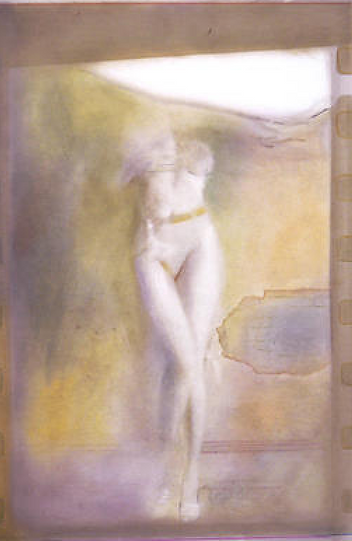
Two Weeks After, 1991 - 1995


Two Weeks After, shot in 1991. Printed and Toned in 1995

Red Torso, 1991/1995
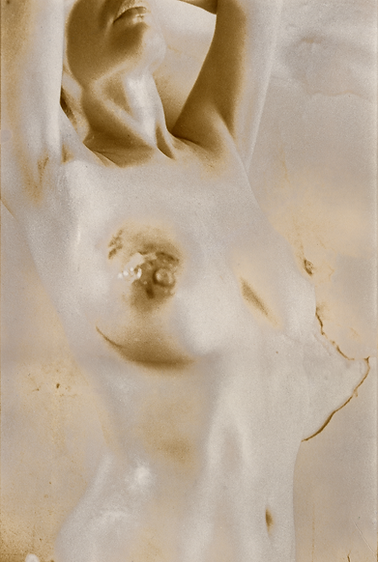
Porcelain Torso, 1991/1995
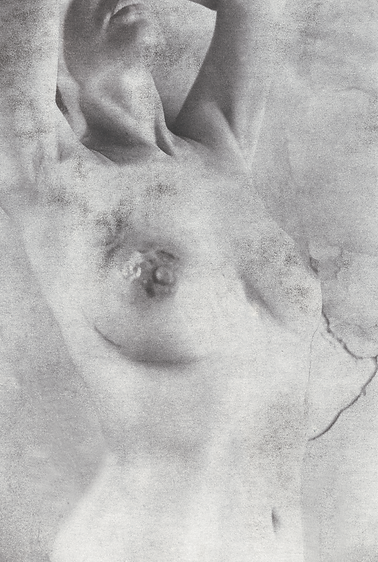
Grey Torso, 1991/1995

Balancing A Lopsided Act, B&W, 1992 (Before)

Balancing A Lopsided Act (Toned), 1992 (After)

Last Letter to Florence, London, 2000

Up in Smoke, 1992

Hollywood, (Solarized) 1994 -1995

Hollywood, (Gold Tone) 1994 -1995
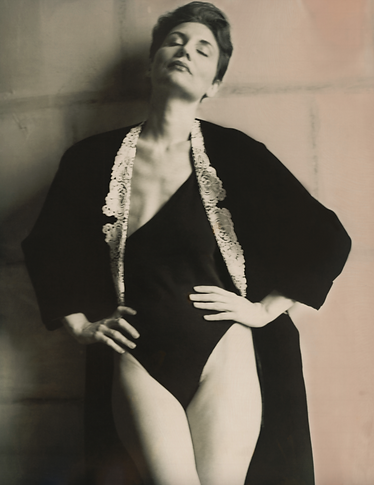
Hollywood, (Pink Tone) 1994 -1995

Up Against the Wall, B & W, 1989

Up Against the Wall (Blue Stripes) , 1989

Up Against the Wall (Purple/Brown Tone), 1989

Up Against the Wall, (Brown Tone), 1989
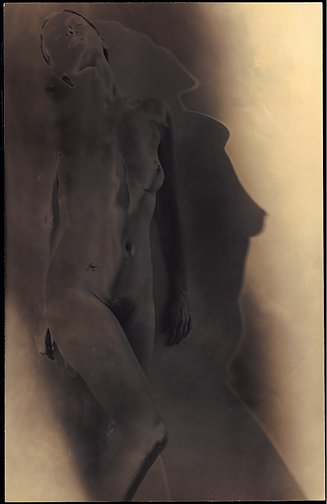
Up in Smoke 1992
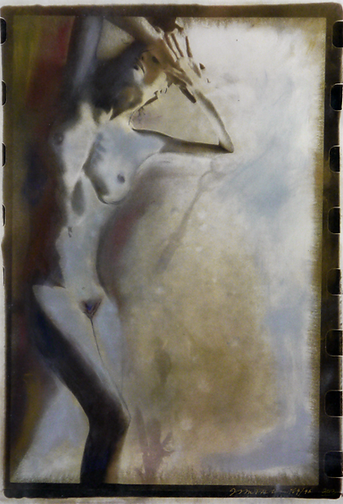
Against the Wall, 1989-1995
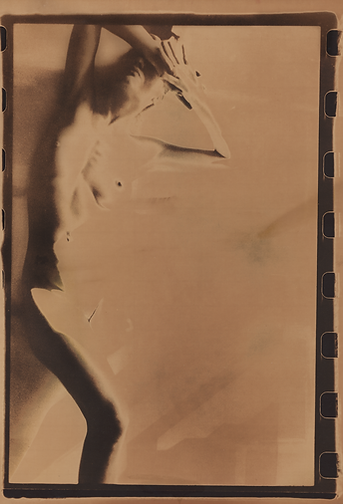
Against The Wall, Brown, 1989-1995

Crucified B&W, (Original) 1993

Crucified Toned (all colors) 1995

Crucified Toned (Toned Bat Woman) 1995

Hands Out (Water Stain #1), 2000

Hands Out (Water Stain #2), 2000

Matuschka, Homage to Lillian Gish, 1975

Pink Lady #2, 1992-1995

Pink Lady #1, 1992-1995
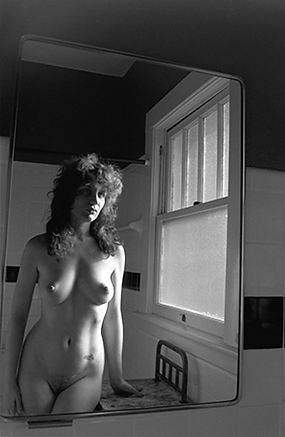
Abandoned in Alabama, 1989

Abandoned in Alabama (Sepia Toned), 1989

Madonna Reverse, 1995

The New Deal, 1994
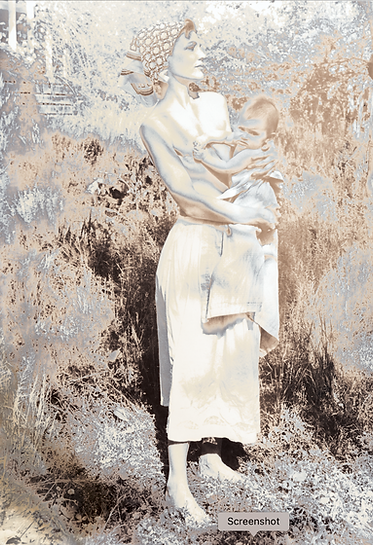
Madonna, 1994-1995

Bubbles #1, 2001
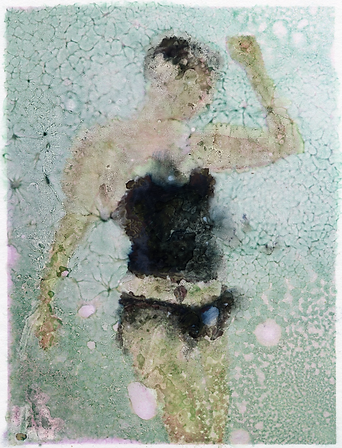
Bubbles #2, 2001

Bubbles #3, 2001

EARLY EXPERIMENTAL PHOTOGRAPHY - 1971
THE BERKSHIRES: LENOX, MASS 1971-1973


While attending Windsor Mountain Prep School in Lenox Mass. in 1971, Matuschka, now 17, took a darkroom course and immediately began experimenting with different numbered papers, filters, and chemicals to create her one-of-a-kind prints.
She also experimented with double exposures, using her self-portrait negatives and others she took of innate objects to create a mysterious overlay effect.